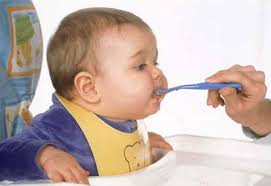
Breast milk (ASI) is the only food that contains all the nutrients needed for the growth of infants aged 0-6 months. However, after the age of 6 months, the nutritional needs of growing babies and can not be fully satisfied by breast milk.
After reaching the age of 6 months, in addition to breastfeeding infants should also get complementary feeding (solids). At this age the baby's digestive system is also ready to receive food other than breast milk. Babies also have a reflex chewing.
Giving Weaning done gradually, from soft textured foods (milk porridge, and porridge strain), soft (regular porridge, rice and team), to solid foods (plain rice), according to the age of the baby.
About what foods should be introduced first time in infants, dr.I Gusti Ayu Pratama, dr.Tiwi Sp.A or familiarly called, actually can be anything, depending on the child's response.
"May the fruit first or carbohydrates first. Important thing was introduced first in children. If children do not like do not immediately stop because children need to adapt to the new food flavors," said pediatrician from RS.Bunda Jakarta.
Dr.Tiwi added, the type of food that is introduced should also be adjusted with the baby's weight. "If you weigh less, you should choose foods that are high in calories," he said.
Cultural influences also affect the type of food being introduced. For example Japanese family, usually they will introduce the first fish to their infants.
What about the risk of allergies? According dr.Tiwi dangerous allergy is not something that parents should not be afraid to try.
"But if there is a history of allergies in a parent, you should not give foods that trigger allergies, such as sources of protein such as beans, fish, or eggs," he said.
For the fruit itself is basically all be introduced. Choose fruit that is fresh and not overcooked so it was sour. Serve fresh fruit in the form of vitamin C that it is not reduced.
Fruit should be given as much as two tablespoons of one meal and two times a day. Each type of fruit is given 2-3 days in a row so that children can get to know it. After that introduced other fruits.
After reaching the age of 6 months, in addition to breastfeeding infants should also get complementary feeding (solids). At this age the baby's digestive system is also ready to receive food other than breast milk. Babies also have a reflex chewing.
Giving Weaning done gradually, from soft textured foods (milk porridge, and porridge strain), soft (regular porridge, rice and team), to solid foods (plain rice), according to the age of the baby.
About what foods should be introduced first time in infants, dr.I Gusti Ayu Pratama, dr.Tiwi Sp.A or familiarly called, actually can be anything, depending on the child's response.
"May the fruit first or carbohydrates first. Important thing was introduced first in children. If children do not like do not immediately stop because children need to adapt to the new food flavors," said pediatrician from RS.Bunda Jakarta.
Dr.Tiwi added, the type of food that is introduced should also be adjusted with the baby's weight. "If you weigh less, you should choose foods that are high in calories," he said.
Cultural influences also affect the type of food being introduced. For example Japanese family, usually they will introduce the first fish to their infants.
What about the risk of allergies? According dr.Tiwi dangerous allergy is not something that parents should not be afraid to try.
"But if there is a history of allergies in a parent, you should not give foods that trigger allergies, such as sources of protein such as beans, fish, or eggs," he said.
For the fruit itself is basically all be introduced. Choose fruit that is fresh and not overcooked so it was sour. Serve fresh fruit in the form of vitamin C that it is not reduced.
Fruit should be given as much as two tablespoons of one meal and two times a day. Each type of fruit is given 2-3 days in a row so that children can get to know it. After that introduced other fruits.
